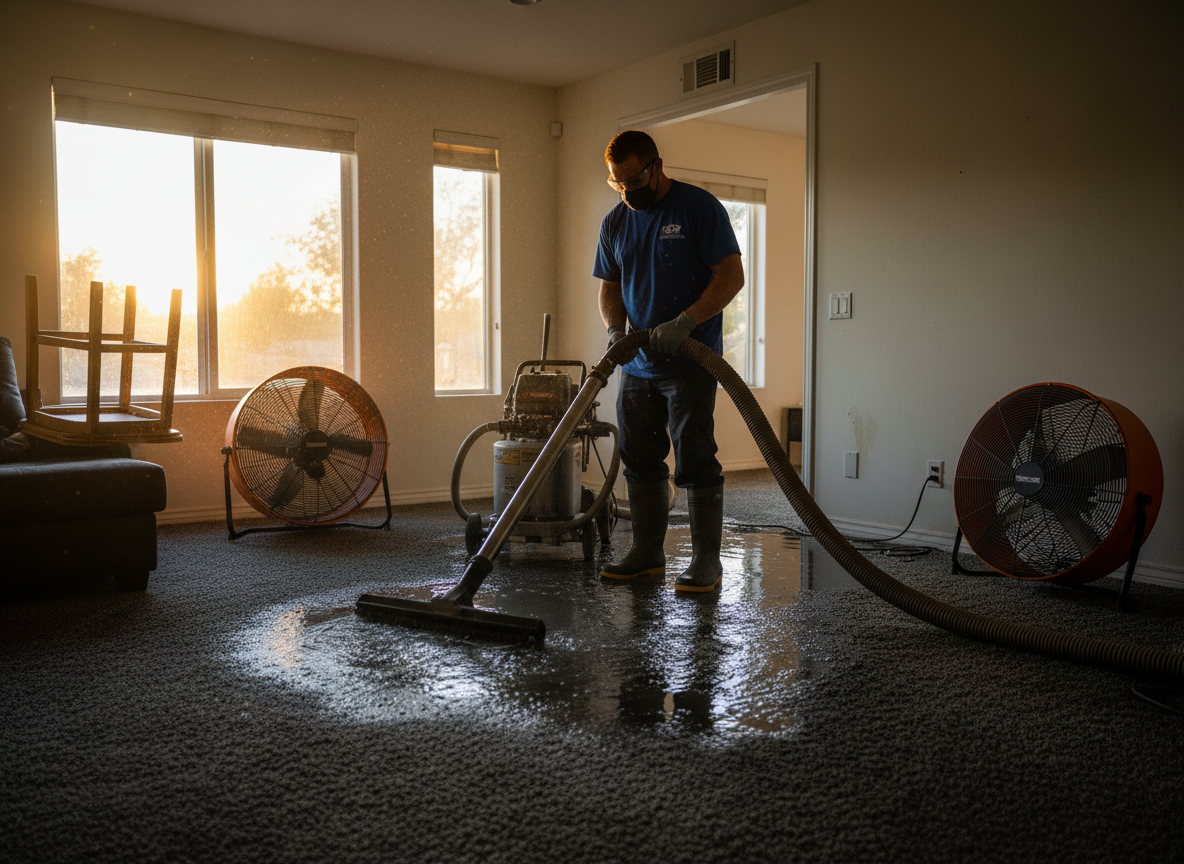
Porter Ranch homes built on the hillsides near Sesnon Trail often feature slab foundations or attached garages that trap water after winter rains break the typical dry pattern. Extraction crews must account for the Mediterranean climate's sudden downpours that overwhelm drainage around the Town Center retail area and flow toward lower West Porter Ranch streets. Using truck-mounted pumps rated for high volume, technicians pull water from carpet pads and subfloor cavities before moisture migrates into drywall. Skipping this step in Northridge or Chatsworth properties frequently leads to hidden mold behind baseboards within days.
Edge cases appear when water reaches electrical outlets or HVAC returns common in 1990s-era Porter Ranch tract homes. Extraction then requires isolating power and using moisture meters to confirm readings below 15 percent before reinstalling finishes. Los Angeles County code expectations around ventilation during drying mean crews set up air movers pointed at wet framing rather than simply running dehumidifiers alone. Homeowners who attempt shop-vac removal on their own usually leave enough residual water in underlayment to cause cupping in hardwood floors installed over concrete slabs.
The terrain slope from the hills above Rinaldi Street can direct runoff under stucco exteriors, so extraction plans include checking weep holes and window wells first. In summer, when irrigation systems run hard, a broken line near the Town Center can push water under patios and into crawlspaces that many West Porter Ranch properties still have. Technicians document saturation levels room by room to create a clear scope before any reconstruction begins.
Technician insight
In Porter Ranch, the thing that catches most people out with water extraction is how the hill slope near Sesnon Trail keeps pushing water back under stucco even after the initial pump-out. Homeowners often stop too soon because the surface looks dry, but the slab edges in these 1990s homes hold moisture for days longer than flat lots in Northridge.
Garage Flood After Winter Rain
Water entered a West Porter Ranch garage through the driveway slope after an overnight storm. Extraction revealed saturation under the slab edge and into the adjacent laundry room drywall. Crews removed the water, ran targeted drying along the foundation, and confirmed dry readings before the homeowner replaced baseboards.
How it works
- 1
Initial Assessment
Technicians arrive within hours, locate the water source, and map affected rooms using moisture meters while noting any slope-driven flow from the surrounding hills.
- 2
Water Removal
Truck-mounted extraction units pull standing water from floors and cavities, followed by targeted pumping in garages or lower levels common to Porter Ranch builds.
- 3
Drying Setup
Air movers and dehumidifiers are positioned based on actual readings, with attention to slab edges and wall cavities that retain moisture longer in the local climate.
- 4
Final Verification
Post-extraction checks confirm moisture levels meet industry standards before any contents are returned or repairs scheduled.
Pricing
Upfront quotes after inspection; cost driven by water volume, number of affected rooms, and whether subfloor or wall cavities require extra time.