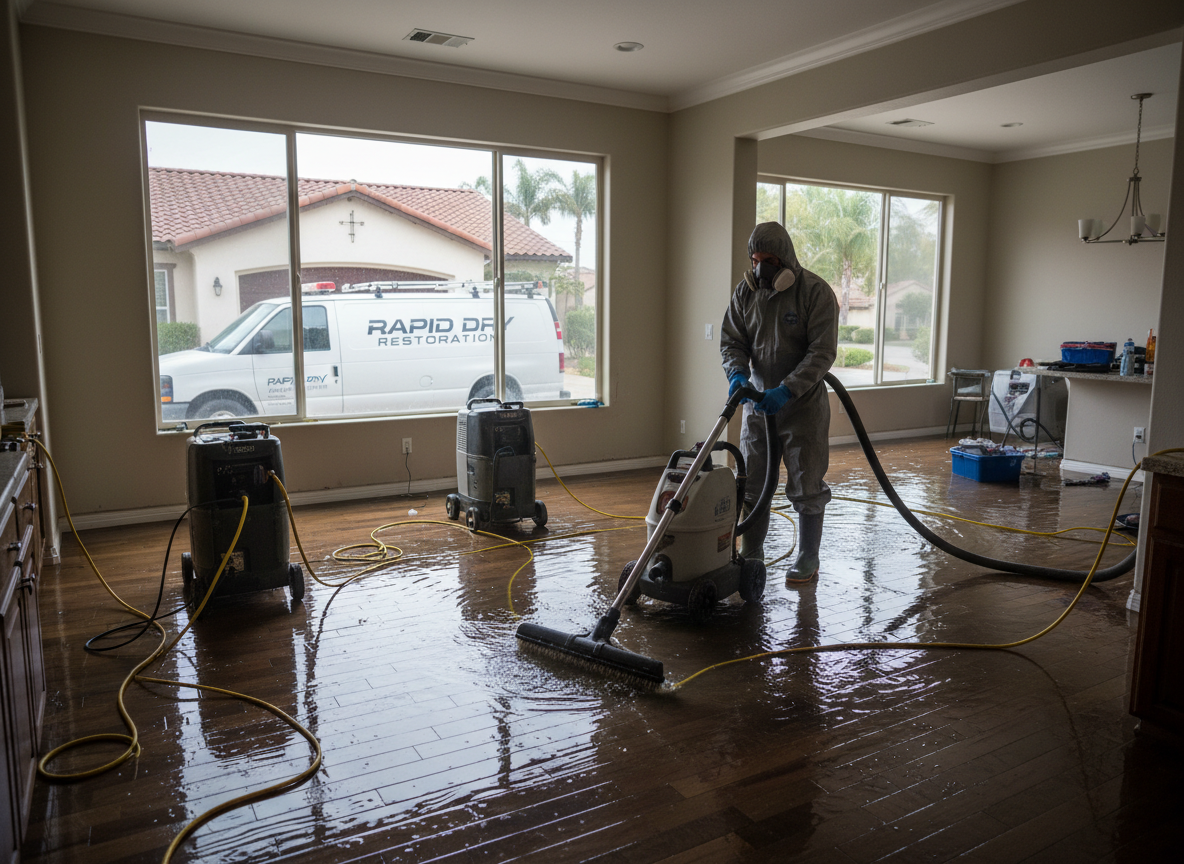
Porter Ranch homes, especially those built on the slopes around Sesnon Trail and West Porter Ranch, often feature stucco over wood framing that lets water travel far before it surfaces. In the Mediterranean climate with hot dry summers, surface water evaporates quickly while moisture remains trapped behind walls and under slabs, creating conditions for mold within days. Our crews start with infrared moisture mapping and targeted extraction using truck-mounted pumps sized for the volume typical in single-family residences here, preventing the secondary damage that shows up weeks later when humidity spikes again.
Nearby Northridge and Chatsworth share the same hillside drainage patterns that send runoff toward lower Porter Ranch lots after rare but intense winter rains. When a main line fails or a water heater bursts, the water follows the grade under garages and into finished basements common in newer builds near Porter Ranch Town Center. We isolate the source, remove standing water in measured stages to avoid structural stress on the slab, then deploy air movers and dehumidifiers calibrated for the low natural airflow in these enclosed hillside lots.
Los Angeles County code requires proper disposal of extracted water when it contains sediment from local soil; we document volumes and route wastewater accordingly rather than discharging to storm drains. Edge cases we see regularly include saturation in the crawl spaces of homes backing up to the trail system, where limited access forces smaller portable extractors and longer drying cycles. Homeowners who attempt DIY removal with shop vacs often miss the vapor barrier under flooring, leaving hidden pockets that later cause cupping in hardwood installed over concrete.
Technician insight
In Porter Ranch, the thing that catches most people out with Emergency water removal is how water follows the slope under stucco homes on the hills near Sesnon Trail and pools against the foundation on the downhill side, saturating the vapor barrier under the slab before anyone notices a problem inside.
Burst Supply Line Under Garage Slab
A supply line failed overnight in a West Porter Ranch home, sending water under the garage slab and into the adjacent family room. We extracted standing water, mapped moisture that had traveled under the slab toward the slope, and ran drying equipment for four days until readings stabilized. The homeowner avoided slab replacement by catching the hidden saturation early.
How it works
- 1
Arrival and Safety Shutoff
Technician reaches the address within the service window, locates the water source, and shuts off supply at the meter or fixture to stop additional flow into the structure.
- 2
Standing Water Extraction
Truck-mounted and portable pumps remove bulk water from floors, carpets, and low areas while protecting electrical outlets and documenting depth and affected square footage.
- 3
Moisture Mapping and Containment
Infrared cameras and moisture meters identify hidden saturation in walls, subfloors, and crawl spaces; containment barriers are placed to limit airflow to unaffected rooms.
- 4
Drying and Monitoring
Industrial air movers and dehumidifiers are positioned based on the home's layout and local humidity; daily readings track progress until materials return to acceptable moisture levels.
Pricing
Pricing varies by volume of water, number of affected rooms, and whether hidden moisture in crawl spaces or under slabs requires extended equipment time.