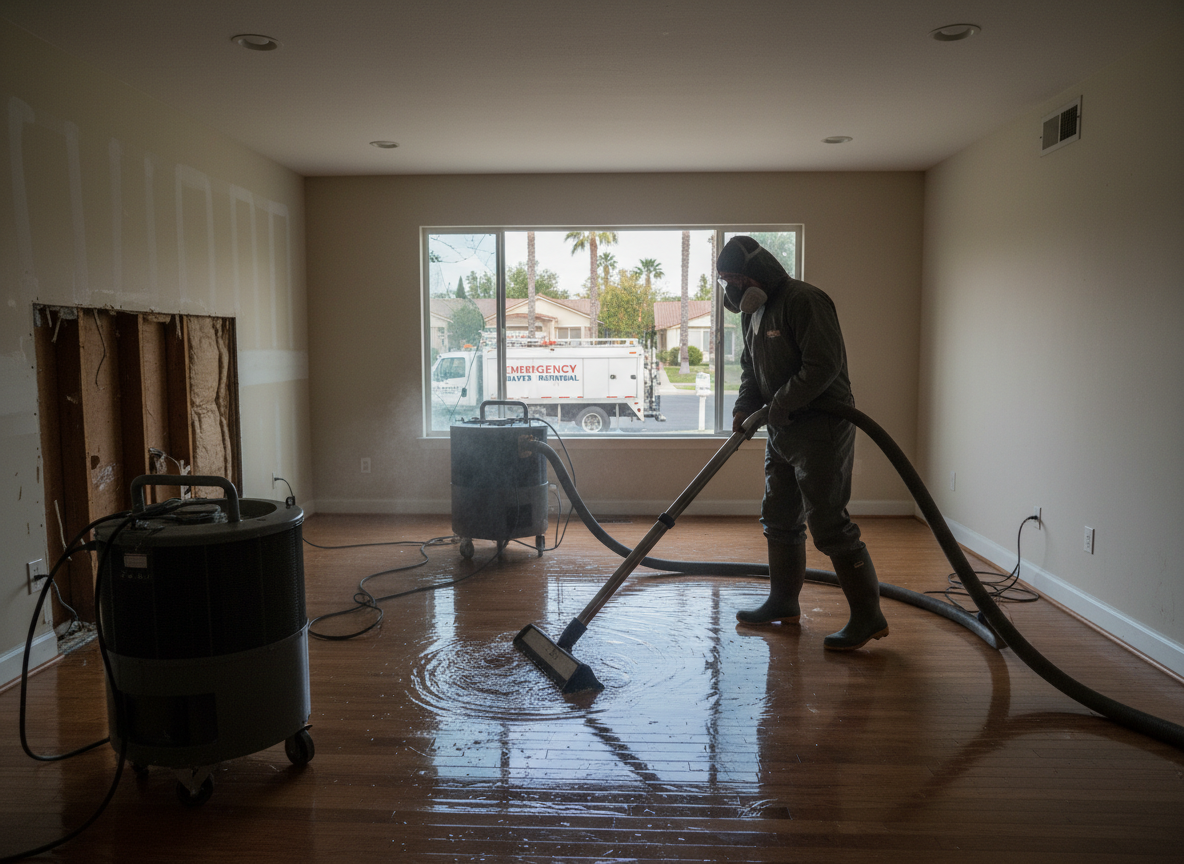
Porter Ranch sits in the foothills where winter rains can send runoff down slopes near Sesnon Trail into West Porter Ranch yards and crawl spaces. Flood water here often carries silt from the dry summer months that clogs extraction equipment and leaves fine sediment in subfloors. Crews use truck-mounted vacuums and air movers placed on the concrete slabs common in 1990s tract homes to pull moisture before it reaches drywall bottoms.
Mediterranean heat after a flood speeds surface drying but traps moisture behind cabinets and under tile in Northridge-border homes. Technicians open walls at least 18 inches above the water line and monitor with moisture meters because hidden pockets behind stucco can feed mold within 48 hours. Local codes require permits for any electrical work once panels get wet, so restoration stops until an electrician clears the system.
Homes along Rinaldi Street often have attached garages that channel water straight into living areas during heavy downpours. Restoration teams place dehumidifiers rated for 150-pint daily removal and rotate them every four hours to keep relative humidity under 50 percent. This prevents warping of engineered flooring installed over concrete in many Porter Ranch Town Center condos.
Technician insight
In Porter Ranch the thing that catches most people out with flood restoration services is the way summer-baked soil on the slopes above Sesnon Trail turns the first big rain into fast-moving silt that travels under stucco and pools against the slab edge on homes built in the late 90s.
West Porter Ranch Garage Flood
Heavy overnight rain sent runoff from the hills behind a West Porter Ranch home into the attached garage and under the laundry room slab. Extraction revealed water had wicked 14 inches up the drywall behind the washer. Crews removed the lower drywall, dried the slab for four days, and replaced the base cabinets before any mold formed.
How it works
- 1
Emergency Assessment
Arrive within the hour, map water migration through slabs and walls, and document affected rooms with photos for insurance.
- 2
Water Extraction
Remove standing water using portable and truck-mounted pumps, then extract trapped moisture from carpet pads and underlayment.
- 3
Structural Drying
Set up industrial air movers and dehumidifiers, open wall cavities, and monitor moisture levels daily until readings stabilize.
- 4
Sanitizing And Restoration
Apply antimicrobial treatments, replace damaged drywall and flooring, and coordinate final cleaning before reoccupancy.
Pricing
Cost depends on water volume, how far it traveled into walls and floors, and whether hidden moisture requires wall opening; upfront written quotes provided on site.