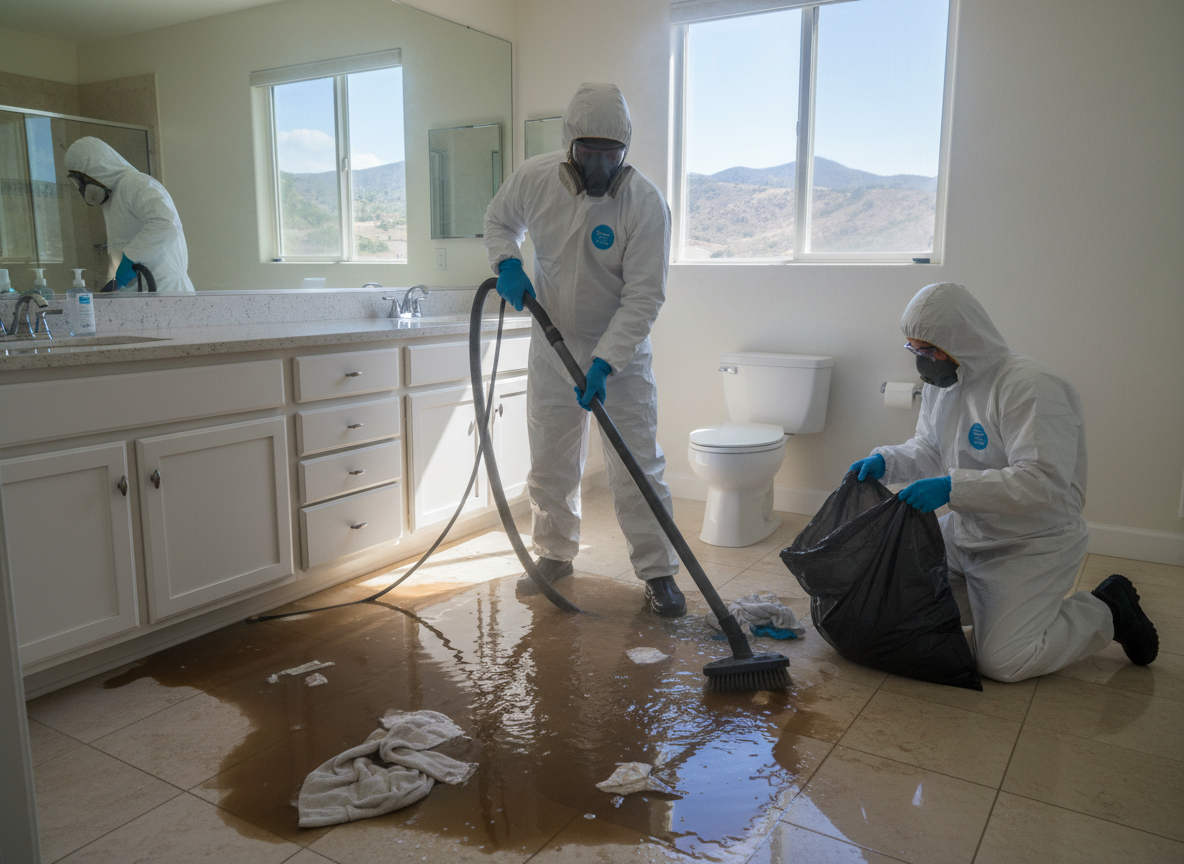
Toilet overflows in Porter Ranch often hit homes built on the slopes around Sesnon Trail and the Town Center developments, where slab foundations and tile-over-concrete floors let water travel under cabinets and into adjacent rooms before homeowners notice. Hot dry summers accelerate surface drying while trapping moisture in baseboards and subfloor seams, so extraction must reach the wall cavities to prevent hidden mold growth common in Los Angeles County properties.
The work starts with shutting off the supply and isolating the affected zone, then removing standing water with portable extractors suited to the tight layouts typical of West Porter Ranch tract homes. Technicians lift baseboards and drill weep holes in drywall to pull moisture from the cavities, followed by drying with air movers and dehumidifiers positioned to account for the area's low summer humidity that can otherwise mask remaining dampness.
After drying, antimicrobial treatment is applied to porous materials that cannot be fully dried in place, and affected flooring sections are documented for replacement. Service runs from the 19765 Rinaldi St location with crews available around the clock to limit secondary damage in neighborhoods bordering Northridge and Chatsworth.
Technician insight
In Porter Ranch, the thing that catches most people out with Toilet overflow cleanup is how the Mediterranean climate's hot dry summers make surface floors feel dry within hours while water stays trapped under tile and behind toe-kicks in the newer Town Center homes, so skipping cavity drying always leads to callbacks.
Overflow Behind Vanity in West Porter Ranch
Water from an upstairs toilet reached the first-floor powder room and traveled under the vanity into the hallway. Extraction pulled water from the slab edge and baseboards; drying equipment ran for three days until readings normalized. The homeowner avoided mold issues that often appear weeks later in similar homes near the Town Center.
How it works
- 1
Initial Assessment
Technician arrives, locates the source, maps water migration through the home, and identifies materials at risk in the specific floor plan.
- 2
Water Extraction
Standing water is removed with truck-mounted and portable units, followed by targeted removal from under cabinets and along wall lines.
- 3
Drying and Monitoring
Air movers and dehumidifiers are placed; moisture readings are taken daily until levels match unaffected areas of the structure.
- 4
Sanitizing and Restoration
Treated surfaces receive antimicrobial application; damaged materials are removed and the area is prepared for repairs.
Pricing
Pricing varies by volume of water, number of affected rooms, and whether subfloor or wall cavities require opening.