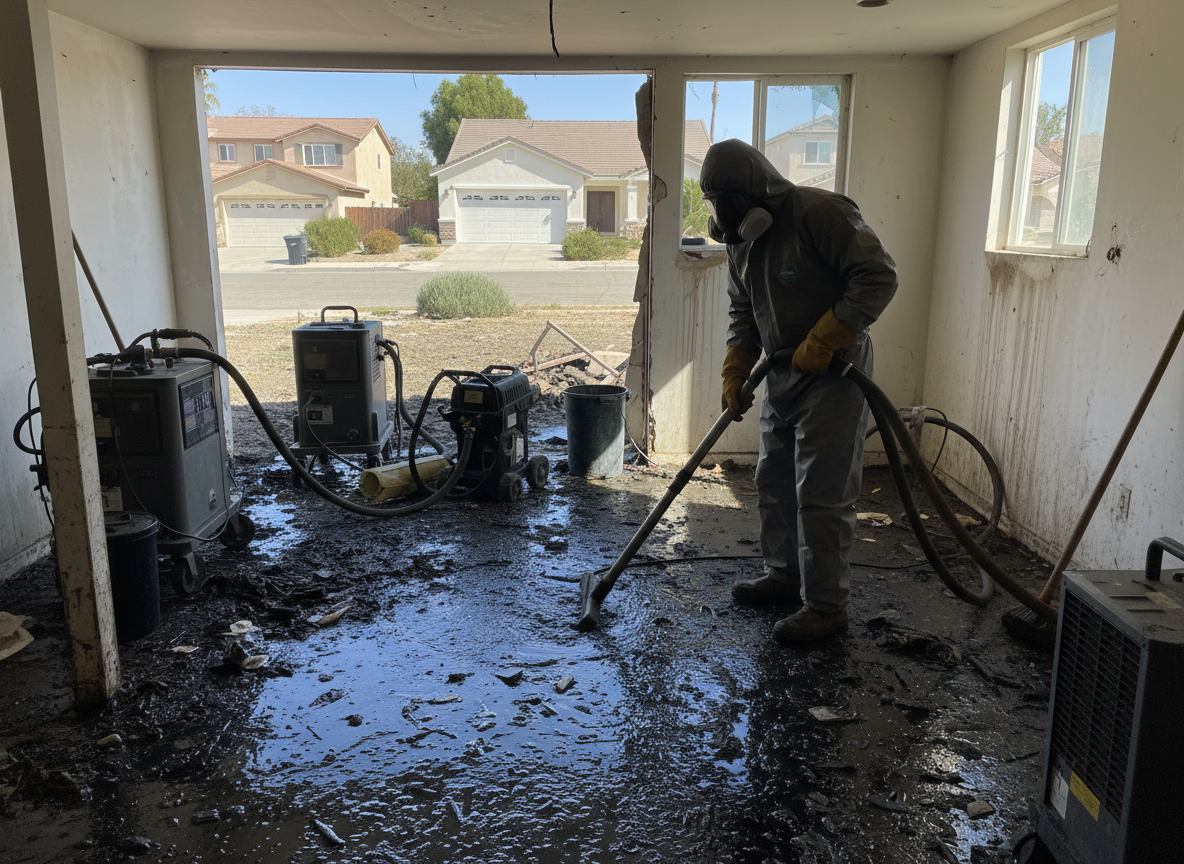
Sewage backups in Porter Ranch often trace to aging lateral lines in homes built during the area's growth phases, especially where slopes near Sesnon Trail create drainage challenges. Hot dry summers intensify odors and bacterial spread quickly, requiring immediate containment to prevent migration into drywall and subfloors common in local single-family residences. Technicians must account for Los Angeles County health codes on Category 3 water, using negative air machines and HEPA filtration to protect neighboring properties in dense pockets around Porter Ranch Town Center.
Cleanup protocols differ from standard water extraction because sewage introduces pathogens that survive longer in the region's low-humidity air once surfaces dry superficially. Crews remove saturated carpet pad and insulation first, then apply hospital-grade disinfectants followed by moisture mapping to catch hidden pockets in crawl spaces typical of West Porter Ranch builds. Failure to address soil saturation around foundations can lead to recurring issues after the next winter rain event.
Coordination with local waste haulers is essential when large volumes must leave the site, and technicians document every step for insurance adjusters familiar with Northridge and Chatsworth claims. Homeowners in Porter Ranch frequently overlook HVAC returns that pull contaminated air through the system, so full duct inspection forms part of every job.
Technician insight
In Porter Ranch, the thing that catches most people out with sewage cleanup is how the hot dry summers around Sesnon Trail dry the surface fast while moisture stays trapped under slabs and in wall cavities common to homes near West Porter Ranch, letting bacteria linger until the next rain.
Sewage Backup Near Porter Ranch Town Center
A West Porter Ranch residence experienced overflow from a line tied to the slope behind the property. Inspection revealed waste had wicked into baseboards and underlayment. Crews contained the rooms, extracted solids, removed affected flooring, and ran drying equipment for three days. Final testing showed safe levels before the family returned.
How it works
- 1
Initial Assessment
Technicians arrive within hours, identify the source, test for contaminants, and map affected zones while protecting unaffected areas of the home.
- 2
Containment and Extraction
Plastic barriers and negative air setups isolate the space; pumps and vacuums remove standing waste and solids before any drying begins.
- 3
Cleaning and Disinfection
All surfaces receive antimicrobial treatment, followed by removal of porous materials that cannot be salvaged under health guidelines.
- 4
Drying and Verification
Industrial air movers and dehumidifiers run until moisture readings meet standards, then final clearance testing confirms the space is safe.
Pricing
Pricing varies by square footage affected, depth of contamination, and whether structural materials must be removed.