Porter Ranch homes, especially those in West Porter Ranch near the Town Center, often feature vaulted ceilings and attic spaces that trap condensation when residents run air conditioning nonstop during the long hot dry summers. This moisture settles on insulation and roof sheathing, feeding mold colonies that spread from small leaks at pipe penetrations or flashing around skylights. Los Angeles County building practices from the 1990s onward left many attics with limited ventilation, so even minor water intrusion from winter rains or irrigation overspray quickly turns into visible black growth on cellulose materials.
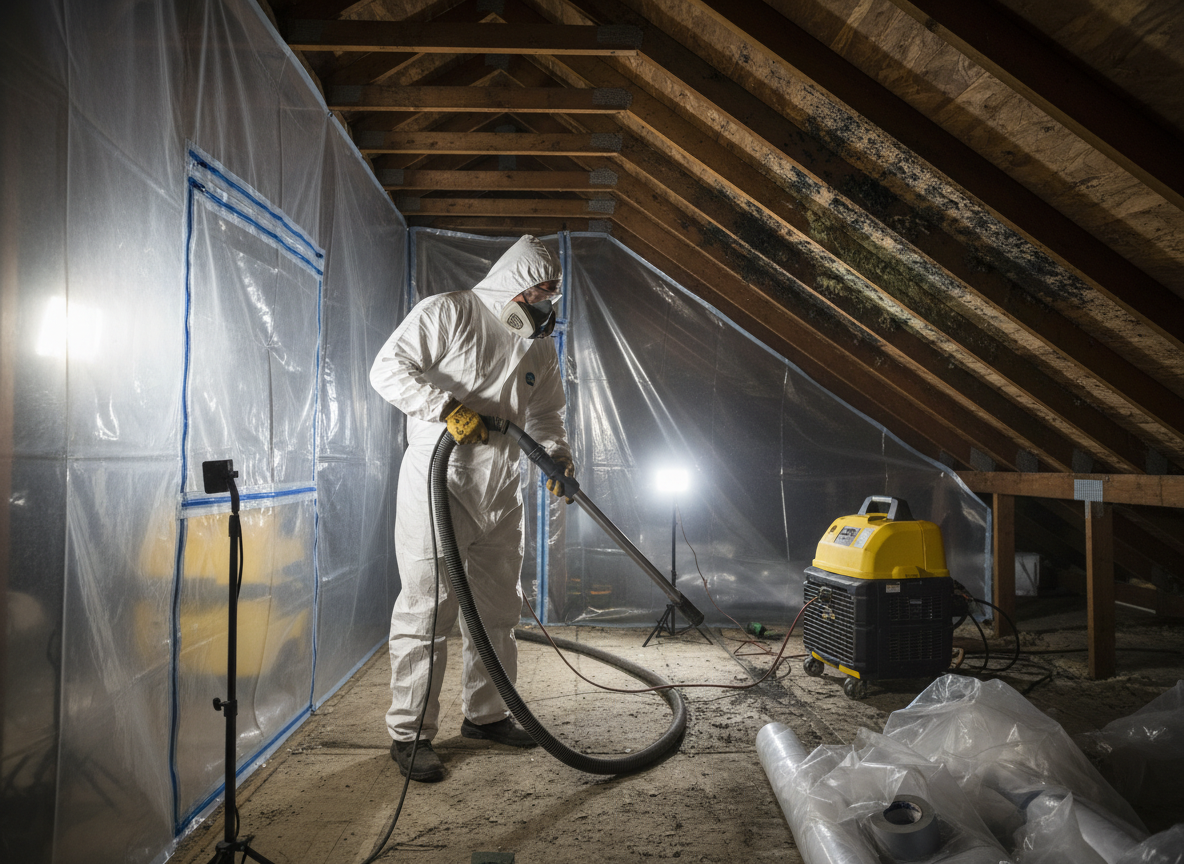
Remediation begins with negative-air containment to keep spores from drifting into living spaces below, followed by HEPA vacuuming and removal of affected insulation rather than simple surface cleaning. Crews must navigate tight access points common in Porter Ranch tract homes while protecting electrical runs and HVAC ducts that run through the same cavities. Because the area sits close to the foothills, temperature swings between day and night accelerate drying cycles, but any remaining damp wood near the Sesnon Trail side of the neighborhood can restart growth within weeks if not fully addressed.
Homeowners frequently discover the issue only after musty odors reach bedrooms or when selling a property and facing inspection flags. Proper work includes post-remediation moisture mapping with meters to confirm levels below 12 percent before new insulation goes in. Skipping the drying verification step in Chatsworth-adjacent homes has led to repeat calls when monsoon moisture finally reaches the San Fernando Valley.
Seasonal Considerations
Hot dry summers reduce visible exterior clues but increase hidden attic humidity from constant AC use, while occasional winter storms can push water under older tile roofs common along Rinaldi Street corridors.
Technician insight
In Porter Ranch, the thing that catches most people out with attic mold remediation is how constant AC use during the hot dry summers creates condensation on roof sheathing in homes built with minimal ridge venting, especially those backing up to Sesnon Trail where afternoon winds push warm air into cooler attic spaces.
Hidden Mold After AC Condensation
A West Porter Ranch homeowner noticed a musty smell in upstairs bedrooms during summer. Inspection revealed condensation-driven mold across fiberglass batts and OSB sheathing from years of AC cycling without adequate ventilation. Crews contained the space, removed wet insulation, treated rafters, and ran drying equipment until readings dropped below 10 percent. The attic stayed clear through the following winter rains.
How it works
- 1
Initial Inspection
Technicians access the attic through existing openings or cut inspection ports, using moisture meters and borescopes to map all affected zones without disturbing settled spores.
- 2
Containment Setup
Plastic sheeting and negative-air machines isolate the attic from the rest of the Porter Ranch home to prevent cross-contamination into living areas and HVAC systems.
- 3
Material Removal
Contaminated insulation, drywall, and wood are bagged and removed; surfaces are HEPA-vacuumed and treated with EPA-registered antimicrobials.
- 4
Drying and Verification
Air movers and dehumidifiers run until moisture readings stabilize, followed by a final inspection to confirm the space is dry before any rebuild begins.
Pricing
Cost depends on attic size, depth of insulation affected, and access difficulty in Porter Ranch homes.