2026-10-15 ·
Step By Step Guide To Drying Out After A Burst Pipe In Porter Ranch
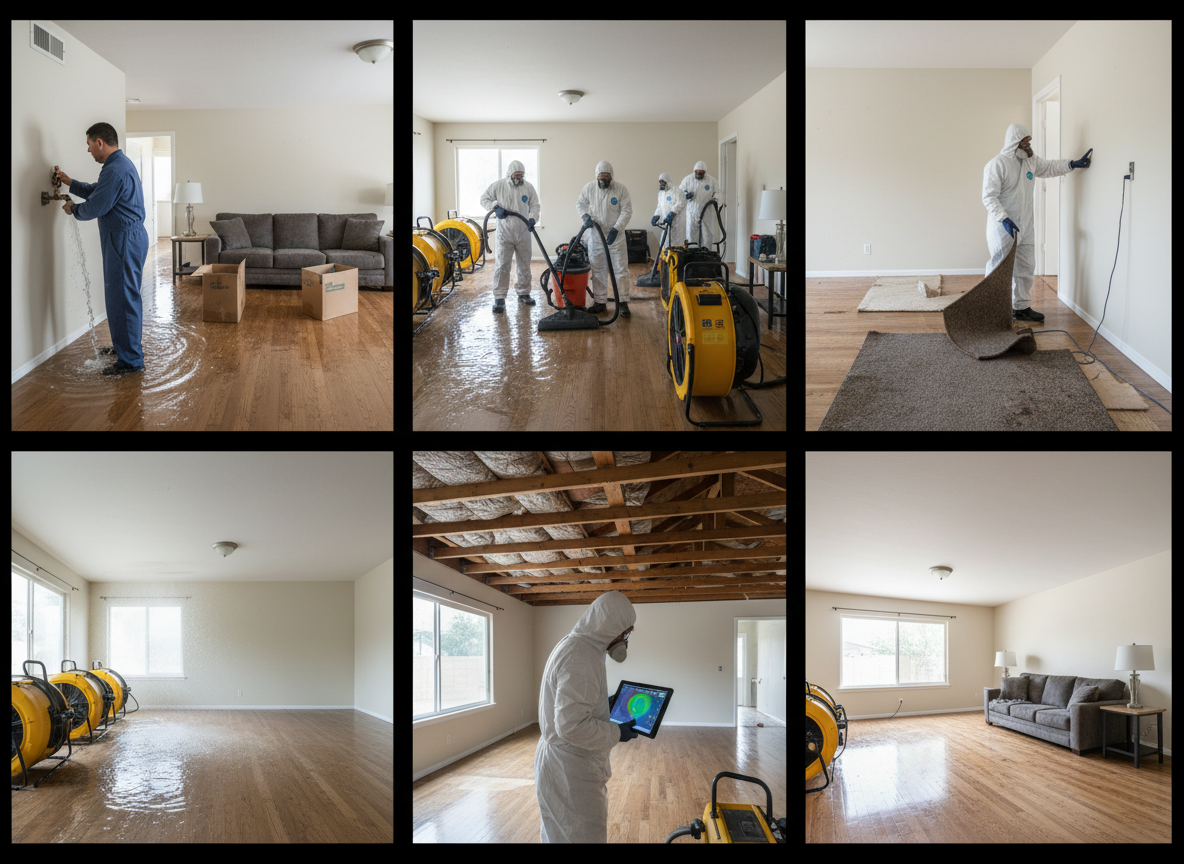
After a burst pipe in Porter Ranch, drying the affected structure takes 3–5 days when extraction and airflow equipment run continuously, though hidden pockets in older West Porter Ranch builds can stretch the timeline. Mediterranean summers speed surface evaporation yet trap humidity inside walls, so dehumidifiers must run longer than in coastal zones. Homes near Porter Ranch Town Center often feature slab-on-grade construction from the 1990s onward, which channels water under cabinets and into adjacent rooms faster than older Northridge stock.
Stop the Flow and Protect Nearby Surfaces
Locate the main shutoff valve immediately, usually in the garage or exterior utility box on hillside properties along Sesnon Trail. Once water stops, move furniture and lift area rugs to prevent wicking into hardwood or carpet pads common in Porter Ranch Town Center townhomes. Place plastic sheeting under leaking fixtures to direct remaining drips into buckets rather than letting them spread across tile or engineered flooring. This initial containment keeps secondary damage from reaching neighboring units in attached West Porter Ranch developments.
Extract Standing Water Before Drying Starts
Remove pooled water with a wet vac or submersible pump within the first hour to limit saturation depth in subfloors. In Los Angeles County homes built on slopes, water often migrates toward lower foundation edges, so check crawl spaces and garages even when the leak appears upstairs. Professional water extraction crews use truck-mounted units that pull more volume than consumer machines, reducing the moisture load before air movers begin. Skipping this step forces dehumidifiers to work overtime and raises the chance of mold in the hot, dry summer air that still holds residual humidity indoors.
Set Up Airflow and Dehumidification Equipment
Position air movers at 45-degree angles against wet walls and direct them across flooring to create a vortex pattern that pulls moisture outward. Pair them with commercial dehumidifiers rated for 70–100 pints per day in typical 2,500-square-foot Porter Ranch residences. Monitor moisture meters every 12 hours; drywall should drop below 15 percent and concrete subfloors below 4 percent before walls are closed. The region’s summer heat helps, yet overnight marine layer moisture drifting from Chatsworth can slow progress, requiring equipment to stay running through the night.
Address Hidden Moisture in Hillside Construction
Porter Ranch hillside homes often have multi-level framing that traps water behind baseboards and under stairwells, so open small inspection holes at the base of wet walls rather than relying on surface readings alone. Check the article How Porter Ranch Hillside Homes Handle Stormwater Runoff Issues for details on how slope drainage interacts with indoor leaks. Run moisture probes into insulation cavities around windows facing Sesnon Trail, where wind-driven rain can compound pipe failures. Once readings stabilize, apply antimicrobial solution to studs before reinstalling drywall to prevent growth during the remaining dry-out phase.
Verify Dryness and Prevent Future Issues
Continue equipment operation until every probed location meets the target percentages, then remove machines gradually over 24 hours while watching for rebound moisture. Homeowners in Northridge and Chatsworth neighborhoods served by the same crews often schedule follow-up visits 48 hours after pack-out to confirm no hidden pockets remain. For leaks tied to aging supply lines common in 20-year-old Porter Ranch builds, consider a full water damage mitigation review that includes pressure testing before walls are finished. This final verification step keeps small bursts from turning into larger remediation projects later in the season.